
Criminal Court Cases in Seminole County
Seminole County divides criminal work by charge level. The Circuit Court of the Eighteenth Judicial Circuit hears felony cases. County Court handles misdemeanors and criminal traffic. City police departments do not run separate municipal criminal dockets, so a Sanford, Altamonte Springs, or Oviedo case filed by the State Attorney still appears in the county Clerk system. The Seminole County Clerk maintains the official case file.
A court file begins when prosecutors file a charging document. That timing matters. An arrest may appear in the jail system before a court case exists, and the filed counts may differ from booking charges. Searchers should treat the Clerk docket as the source for prosecution and outcome, then use the arresting agency for the incident narrative.
Seminole County Court Divisions
The Eighteenth Judicial Circuit publishes division, judge, calendar, and program information. Those pages help identify where a listed hearing belongs, but the Clerk remains the record custodian. Felony case numbers generally use a CF designation. Misdemeanor cases use MM, and criminal traffic uses CT. The year and sequence number are part of the identifier.
The official circuit source is shown in this Eighteenth Judicial Circuit view.
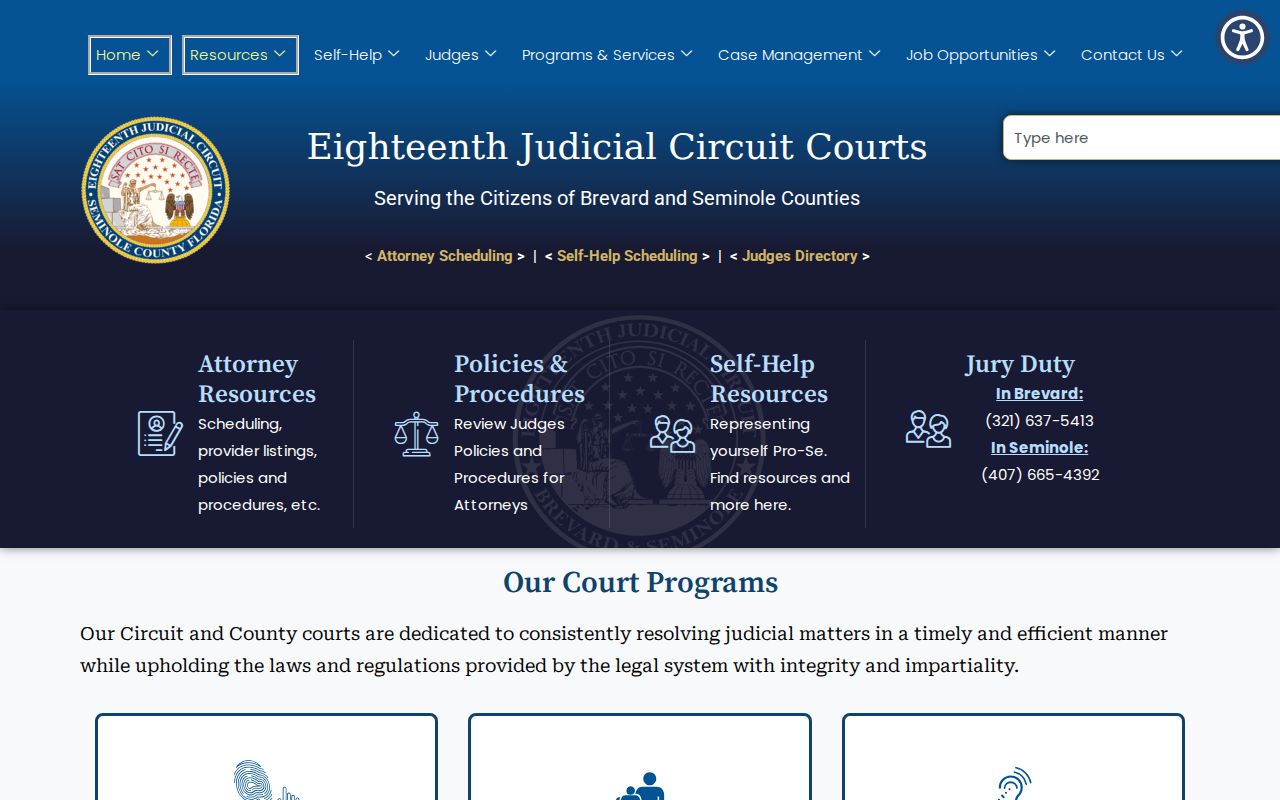
It helps route a Seminole County case to the right court division while the Clerk supplies the docket.
Problem-solving courts can add review hearings and treatment-related docket events. Public entries may show that a hearing occurred without exposing confidential treatment details. Read the docket entry and order together before drawing a conclusion from a program label.
Seminole County Case Record Searches
The free Seminole Clerk Court Records Search is the main remote channel. A complete case number gives the cleanest match. A party-name search is useful when the number is unknown, but common names require careful comparison with the case type, filing date, and other public identifiers. The portal index and available images are not the full universe of Clerk records.
When several results share a name, compare the filing year and division before opening the docket. CF identifies a felony file, MM a misdemeanor file, and CT a criminal traffic file. Those case types help prevent a Seminole County court search from being matched to the wrong proceeding.
- Open the Clerk search and choose the relevant criminal case type.
- Enter a full case number or search the party name.
- Narrow the results with filing dates, year, or case type.
- Open the case and read events in date order.
- Ask the Clerk for an unavailable image, older file, or certified copy.
| Field Label | Type | Required | Notes |
|---|---|---|---|
| Last name | Text | No | Use with first name to narrow results. |
| First name | Text | No | Spelling and aliases can affect a match. |
| Case number | Text | No | Best route when the full identifier is known. |
| Filing date range | Date | No | Useful for common names. |
| Case type | Select | No | CF felony, MM misdemeanor, or CT criminal traffic. |
Older Seminole County Case Files
An absent image does not prove that a record does not exist. Older files, exhibits, and documents withheld from remote view may require a Clerk request or public terminal. The Criminal Justice Courthouse is at 101 Eslinger Way, Sanford, though some county material also uses 101 Bush Boulevard for the Five Points complex. The Clerk criminal division can be reached at 407-665-4300.
The county courthouse location page confirms the public destination. Contact the Clerk before travel when seeking a historic file or certified document. Give the case number, party name, approximate year, and exact item needed. Certification authenticates a Clerk copy; it does not change the meaning of the underlying order.
The county also publishes this Criminal Justice Courthouse image.
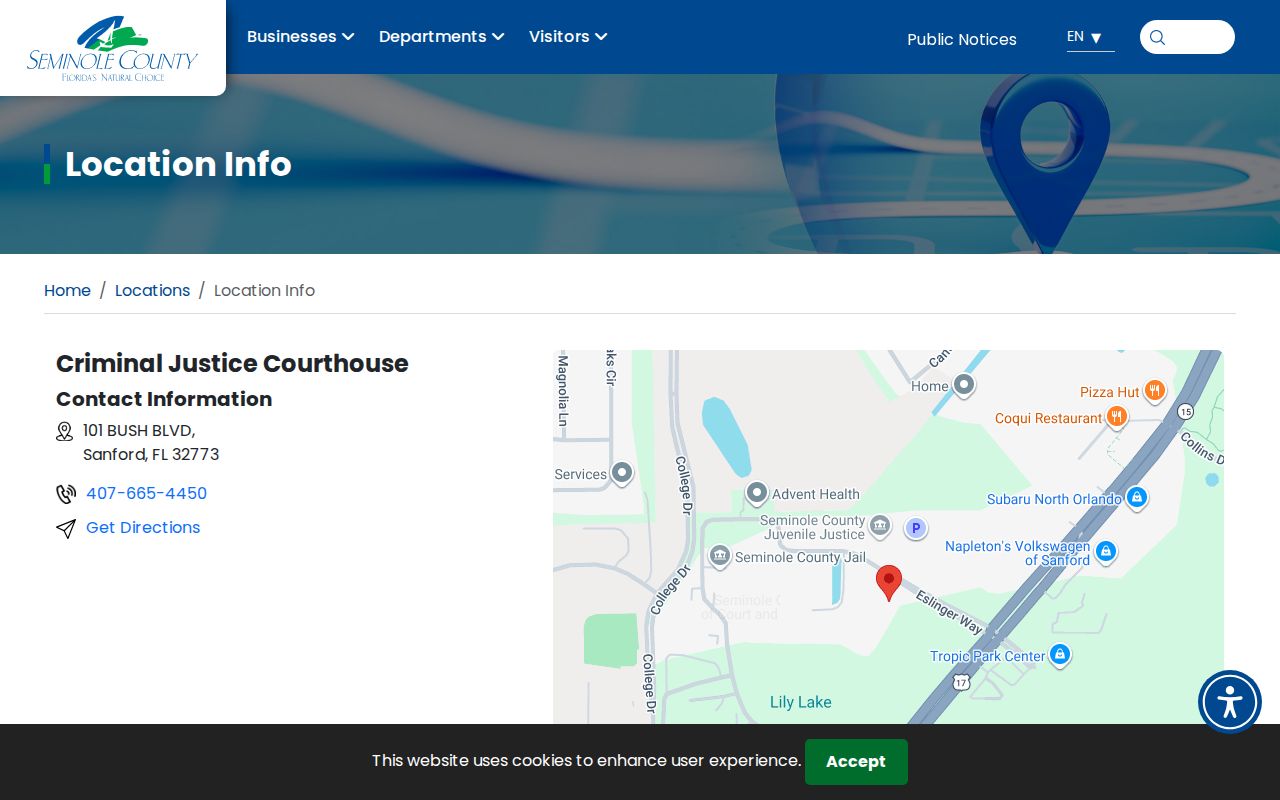
The image connects the online docket to the Sanford counter used for older and certified court records.
What a Criminal Case File Contains
A Seminole County court file records prosecution, not just the original arrest. Read the charging document to see what the State Attorney filed, the docket for procedural history, and the final judgment or disposition for the result. Financial ledgers and hearing lists add context but should not replace the signed order.
The file may also contain motions, notices, hearing records, bond orders, and sentencing documents. Availability varies by document and access level. If an entry has no remote image, request that exact docket item from the Clerk rather than assuming the event has no supporting record.
| Case Number & Court | Identifies the year, division, sequence, and County or Circuit Court. |
|---|---|
| Charging Document | Shows the information, indictment, or other filed accusation and counts. |
| Docket Entries | Dates filings, notices, motions, hearings, and orders. |
| Hearing Dates | Lists scheduled and completed court events. |
| Disposition & Judgment | Records dismissal, plea, verdict, adjudication, and final result. |
| Sentence & Conditions | Shows custody, probation, fines, costs, and court-ordered terms. |
Reading Seminole County Docket Events
An arraignment is the hearing where the accused answers the filed charge. A plea may be guilty, not guilty, or no contest. Adjudication means the court's formal judgment status, which is separate from the plea. A nolle prosequi means the prosecutor discontinued the count. A dismissal ends the count identified by the order, but it does not automatically erase the arrest or booking record.
Read entries in date order and connect each shorthand event to the filed document when available. A scheduled hearing may later be continued or canceled, while a motion records a request rather than the judge's ruling. The signed order or final judgment carries more weight than a short calendar label.
- Information
- A charging document filed by the State Attorney.
- Capias
- Court process directing an arrest, often tied to nonappearance or noncompliance.
- Disposition
- The result of a count, such as dismissal, plea, or verdict.
- Withhold
- A judgment status that must be read from the actual order.
Criminal Case Stages in Seminole County
The State Attorney reviews an arrest before filing charges. The Clerk then opens the case, assigns it to the proper division, and records each filed event. First appearance may occur while the filing decision is still developing. Arraignment addresses the formal charge. Discovery, motions, negotiations, and hearings follow. A plea or trial resolves the charge, and sentencing follows a conviction when not imposed at the same hearing.
Case flow: Charges Filed › Arraignment › Pretrial › Plea or Trial › Disposition › Sentencing
Seminole County Filing Review
The booking charge is an intake claim. The filed information is the prosecutor's formal choice after review. Counts can be added, reduced, changed, or not filed. That is why a jail page and court docket may disagree without either being an error. The State Attorney for the Eighteenth Judicial Circuit handles prosecution, while the Clerk publishes the docket.
When a recent arrest produces no Clerk match, check name spelling and wait for filing activity, then contact the Clerk or arresting agency. Do not assume that a blank search means the arrest was cleared. It can reflect timing, a different identifier, or a decision not yet entered.
Access Rules for Case Records
Florida court records are generally open, but access is not unlimited. Juvenile matters, sealed and expunged cases, victim information, confidential identifiers, and records protected by a court order may be withheld or redacted. Remote access can be narrower than inspection at the Clerk. Florida Public Records Law does not override specific court-record confidentiality rules.
If a Seminole County case does not appear, ask the Clerk whether the issue is spelling, date range, imaging, confidentiality, or archive status. A person reviewing their own record can also use FDLE Personal Review to inspect the statewide history and challenge an error. Court-ordered sealing or expungement requires a separate eligibility and court process; dismissal alone does not produce it.
FDLE presents the subject-only route on its Personal Review page. 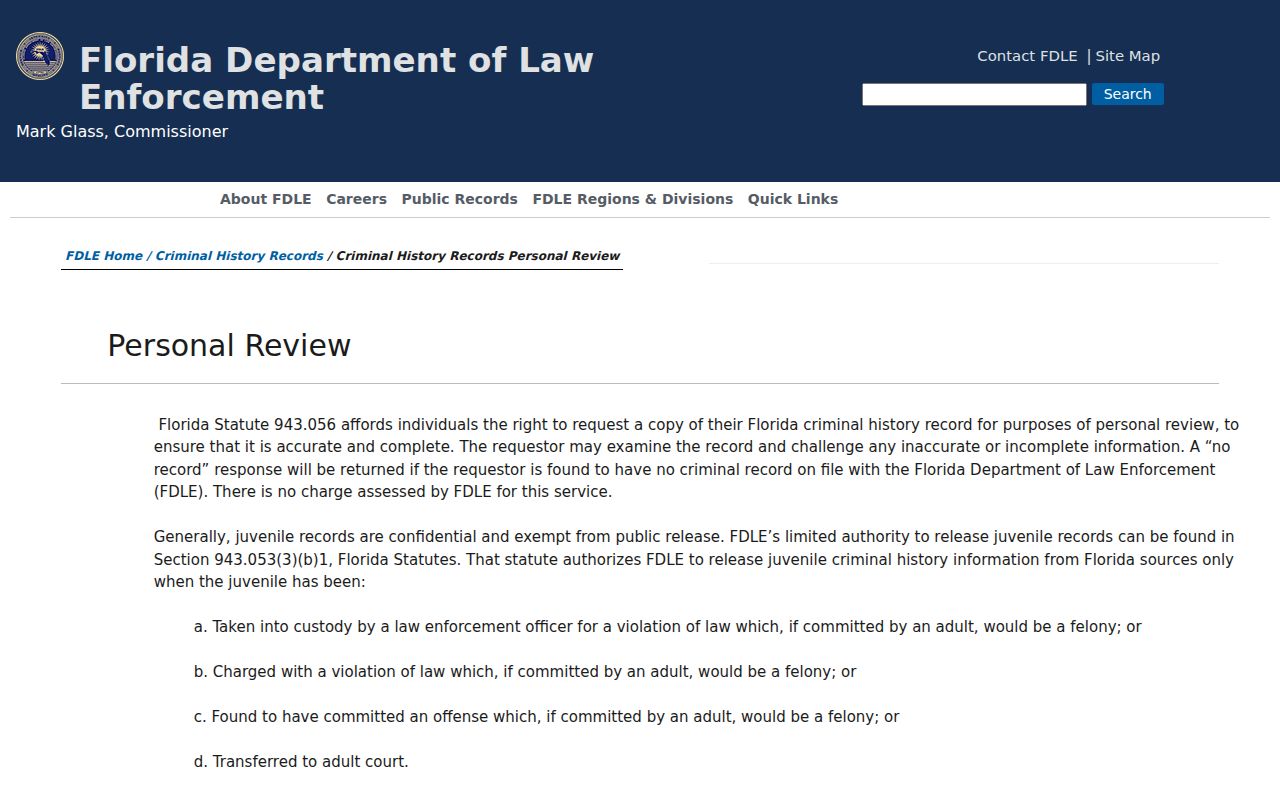 This channel helps a person reconcile the statewide history with a Seminole County disposition.
The broader FDLE Criminal History Records page explains the state repository. 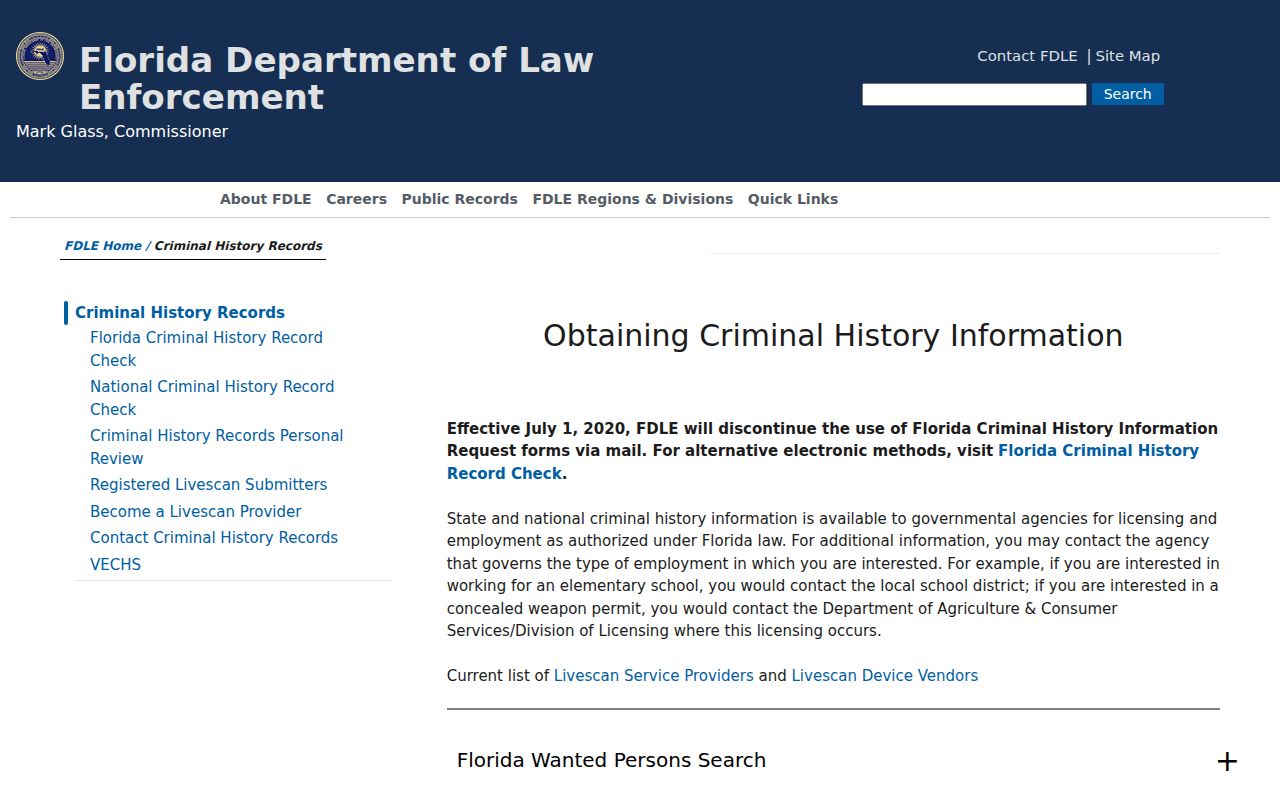 The state record is related to, but does not replace, the Clerk's actual case file.
Seminole County Copies and Balances
The Clerk can supply ordinary or certified copies when an online image is not enough. Ask for the exact docket item and request a cost estimate. Criminal payments have online, phone, mail, counter, and Amscot options described on the Clerk payment page. Displayed payoff figures can omit judgment interest, so confirm a final payoff with the Clerk before relying on the screen total.
A payment entry is not a disposition. Use the signed judgment and sentence to understand the outcome, and use the ledger only for the financial status. This distinction prevents an unpaid balance from being mistaken for an open criminal count.