
Seminole County Sex Offender Checks
The FDLE Sexual Offenders and Predators Search is Florida's authoritative public portal. Select Seminole County or enter a local address to focus results. Use a full name and other public identifiers when checking a person. For neighborhood awareness, search an address and radius rather than guessing names.
FDLE's public interface appears in this registry search image.
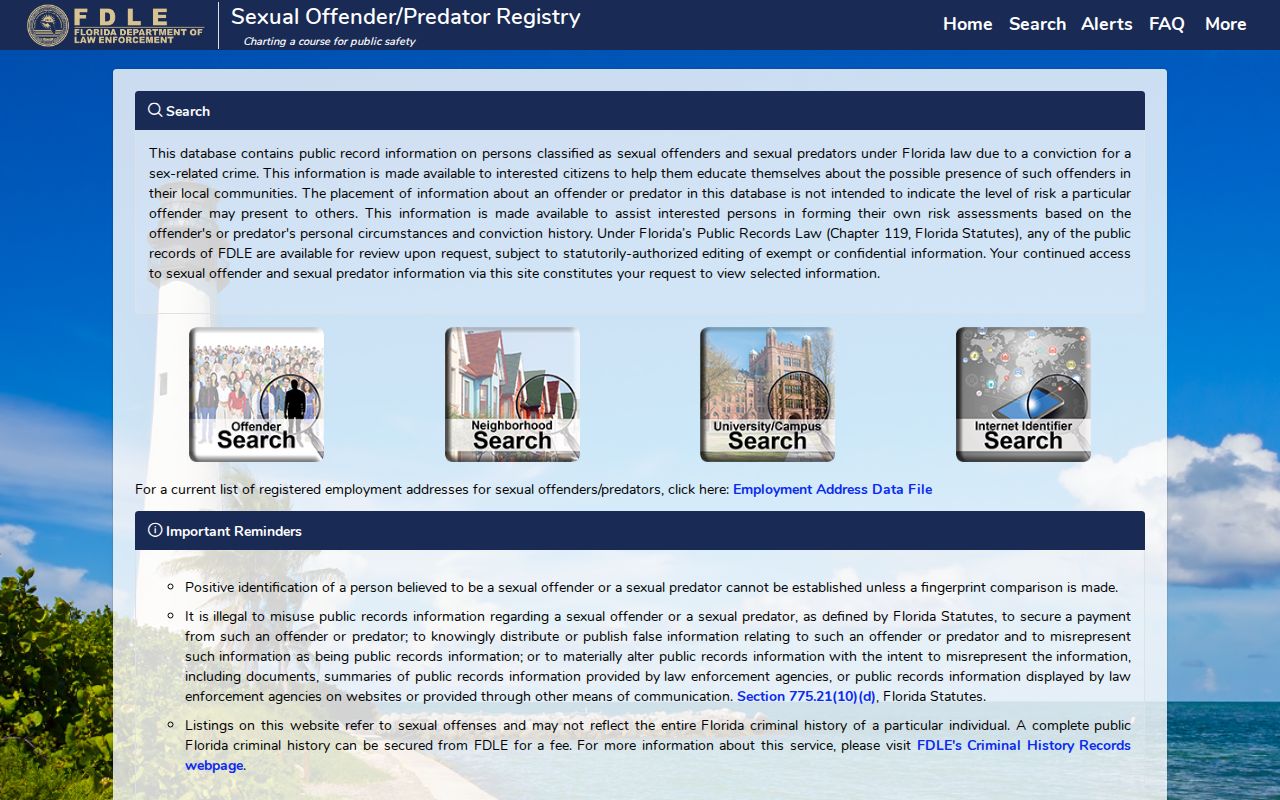
The form supports both person-based and place-based Seminole County searches.
SCSO registers local offenders and predators and investigates suspected noncompliance. Confirm registration arrangements with the sheriff before visiting. FDLE accepts registry questions at 1-888-357-7332 on weekdays and at sexpred@fdle.state.fl.us.
Four Ways to Search FDLE
FDLE supports name, neighborhood or address, university or campus, and internet-identifier searches. Name search follows a person, area search maps a place, campus search focuses on higher-education associations, and internet search checks a reported email or identifier.
A match is not positive identification. FDLE states that fingerprint comparison is required to confirm identity. Review aliases, photograph, physical description, and conviction information together.
Area searches can use a city, county, ZIP code, or full street address with a selected radius. The interface supplies its current distance choices. Campus and internet-identifier modes are separate tools, not filters added to every neighborhood result.
Florida Registry Searches
Open the official FDLE registry search form. It is free and offers map and list results. Read the conditions and warnings before searching because addresses and status can change.
A county filter works for a broad Seminole County check, while a full address and radius are better for a location-centered search. Narrow a name search with the first name, then verify the result against the full profile. Do not rely on a result-list name alone.
- Open the FDLE search and review its conditions of use.
- Choose name, neighborhood, campus, or internet-identifier mode.
- Select Seminole County or enter the best known local details.
- Open the full profile and compare all identifiers and status fields.
| Field Label | Type | Required | Notes |
|---|---|---|---|
| Last name | Text | No | Use the field to narrow the search |
| First name | Text | No | Use the field to narrow the search |
| City or ZIP | Text or select | No | Use the field to narrow the search |
| Seminole | Select | No | Use the field to narrow the search |
| Address and radius | Map | No | Use the field to narrow the search |
Seminole County Offender Alerts
FDLE Offender Alerts can watch a location or a selected registrant. A location alert sends notice when a registrant reports a move within the distance chosen by the subscriber. A person-specific alert can report a move anywhere in Florida.
Alerts support awareness, but they do not replace a fresh search. Registry status can change faster than a saved screenshot. Reopen the live profile before relying on old data.
The FDLE registry FAQ image shows where definitions and alert help live.
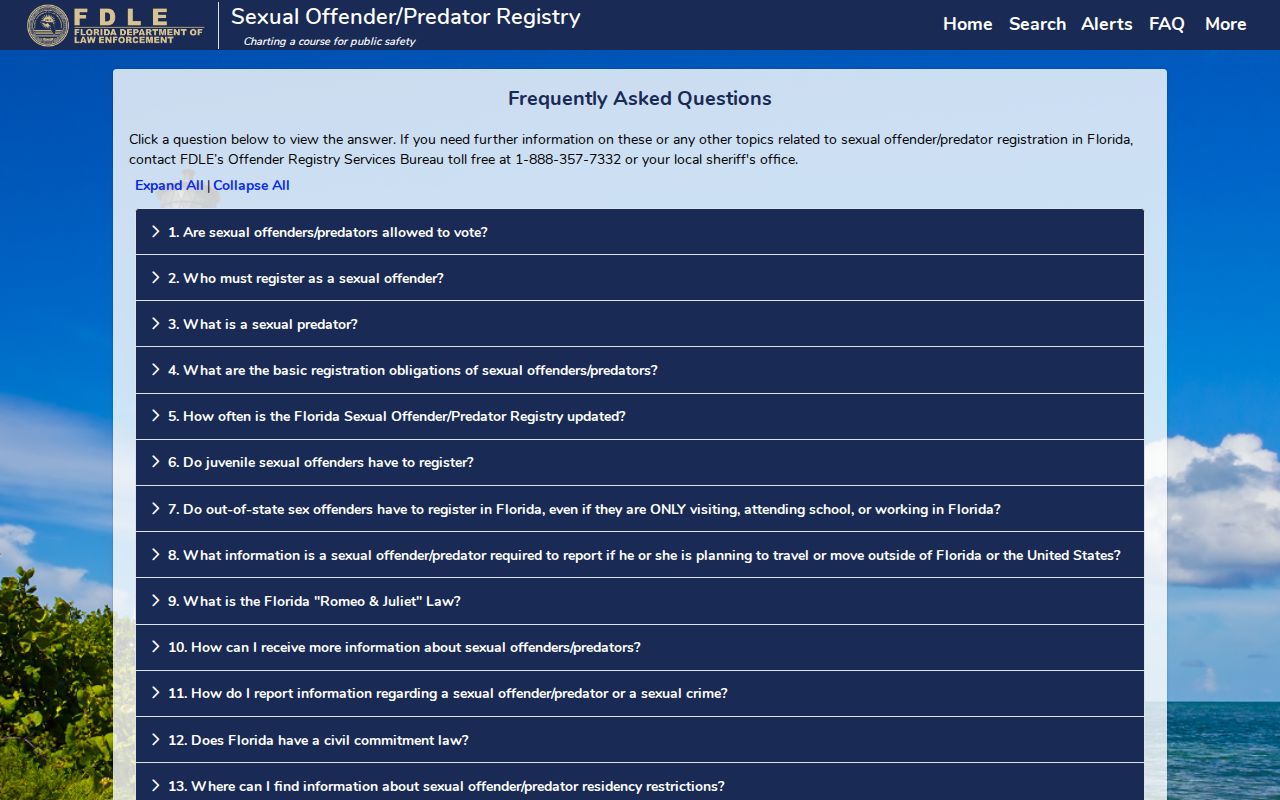
Those explanations clarify how alerts differ from a saved registry result.
Registry Profiles: What They Show
An FDLE profile combines reported identity, location, status, and qualifying-conviction fields. It is not a complete Florida criminal history. Compare all public identifiers and use fingerprints for positive identification.
Profile details can change after a move, verification, custody event, or correction. Compare the photograph, aliases, physical description, classification, and qualifying offense together. Vehicle, internet, campus, supervision, and incarceration information appears only when it is reported and public under Florida law.
| Name & Aliases | Public information reported in the named field |
|---|---|
| Photo & Physical Description | Public information reported in the named field |
| Registered Address | Public information reported in the named field |
| Offense & Statute | Public information reported in the named field |
| Level / Tier | Public information reported in the named field |
| Registration Status | Public status plus supervision or custody information when reported |
Florida Offender Versus Predator
Sexual offender is a statutory classification tied to qualifying offenses. Sexual predator generally requires a qualifying sexually violent offense and written court designation, or a qualifying civil-commitment designation under section 775.21. Neither label is an FDLE prediction of a set risk level.
Read the classification and qualifying conviction rather than translating Florida records into generic national tiers. Current sections 775.21, 943.0435, 944.606, and 944.607 control the duties.
Florida has narrow petition routes for some long-term registrants, plus distinct juvenile and Romeo-and-Juliet provisions. Relief is not automatic. A searcher should read current status, while a person seeking relief must examine the statute and court record for that case.
Registration Levels and Duties in Florida
Florida does not use a simple Tier I, II, and III risk scale. Sexual offender and sexual predator are statutory classifications, and registration is commonly for life with narrow case-specific relief.
Registration duties can include reporting residence and other statutorily required identity, vehicle, internet, campus, supervision, or travel information. The public profile shows only the portion made public by law. Verification schedules depend on classification and statute, so call SCSO before a registration visit and use current Florida law for any legal conclusion.
| Level / Tier | Duration | Verification Frequency |
|---|---|---|
| Sexual offender | Commonly lifetime; verify the governing statute | Confirm current duties with FDLE and SCSO |
| Sexual predator | Commonly lifetime; verify the governing statute | Confirm current duties with FDLE and SCSO |
| Special statutory relief | Commonly lifetime; verify the governing statute | Confirm current duties with FDLE and SCSO |
NSOPW Adds a National Search
The U.S. Department of Justice National Sex Offender Public Website searches participating jurisdictions across state lines. It helps when a person may have moved. For a Seminole County address, FDLE remains the detailed Florida source.
Jurisdictions expose different public fields. A blank national result should not replace a direct state-registry search.
The national layer is represented by this NSOPW search image.
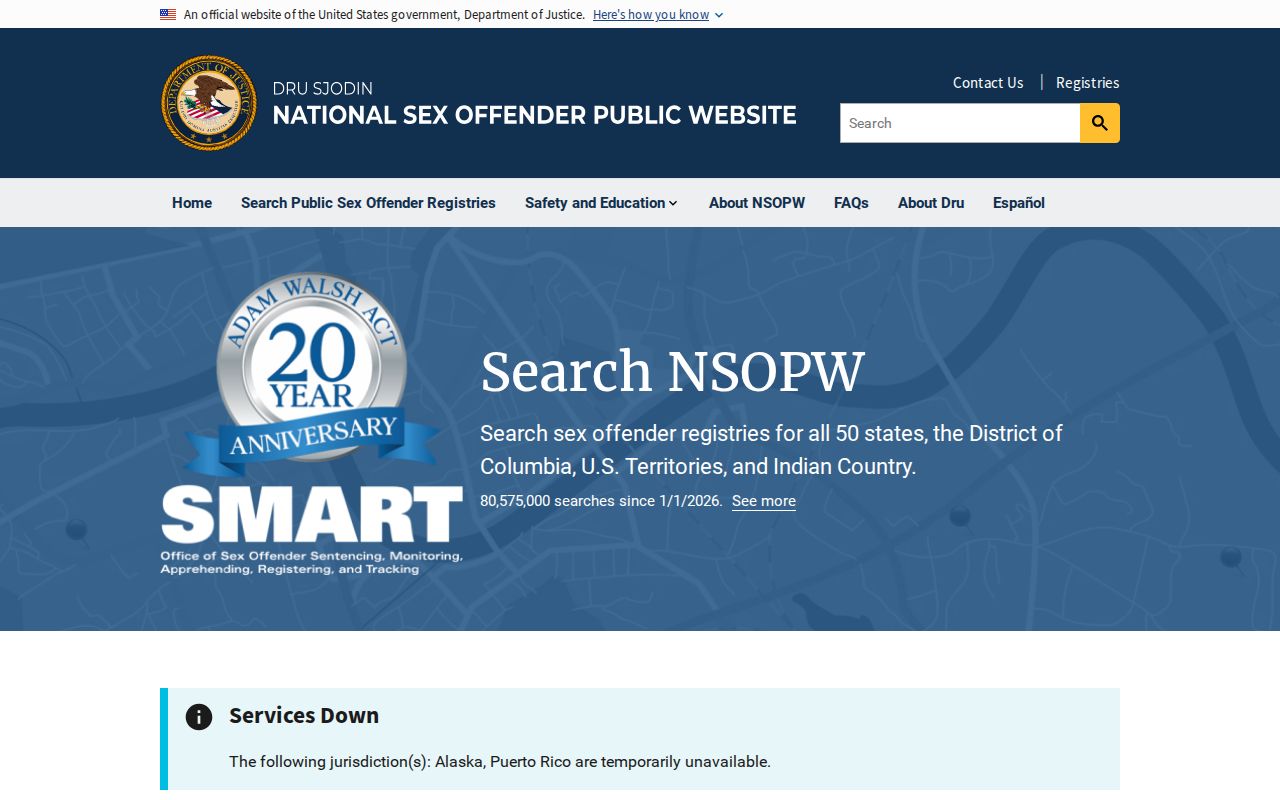
It extends a Seminole County search across participating state registries.
FDLE also links registry information with its official Florida checks overview.
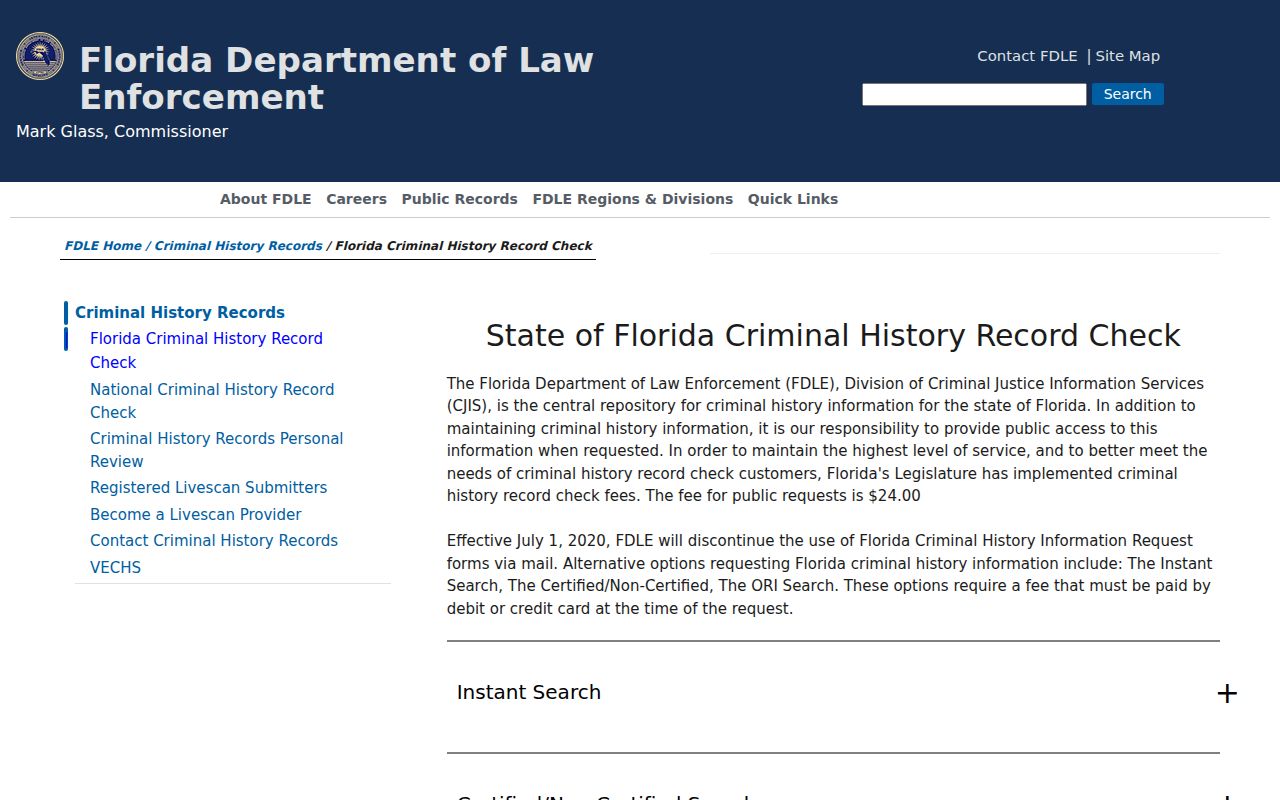
The comparison reinforces that a registry profile is not a full criminal-history report.
For state supervision context, consult the FDC Community Corrections page.
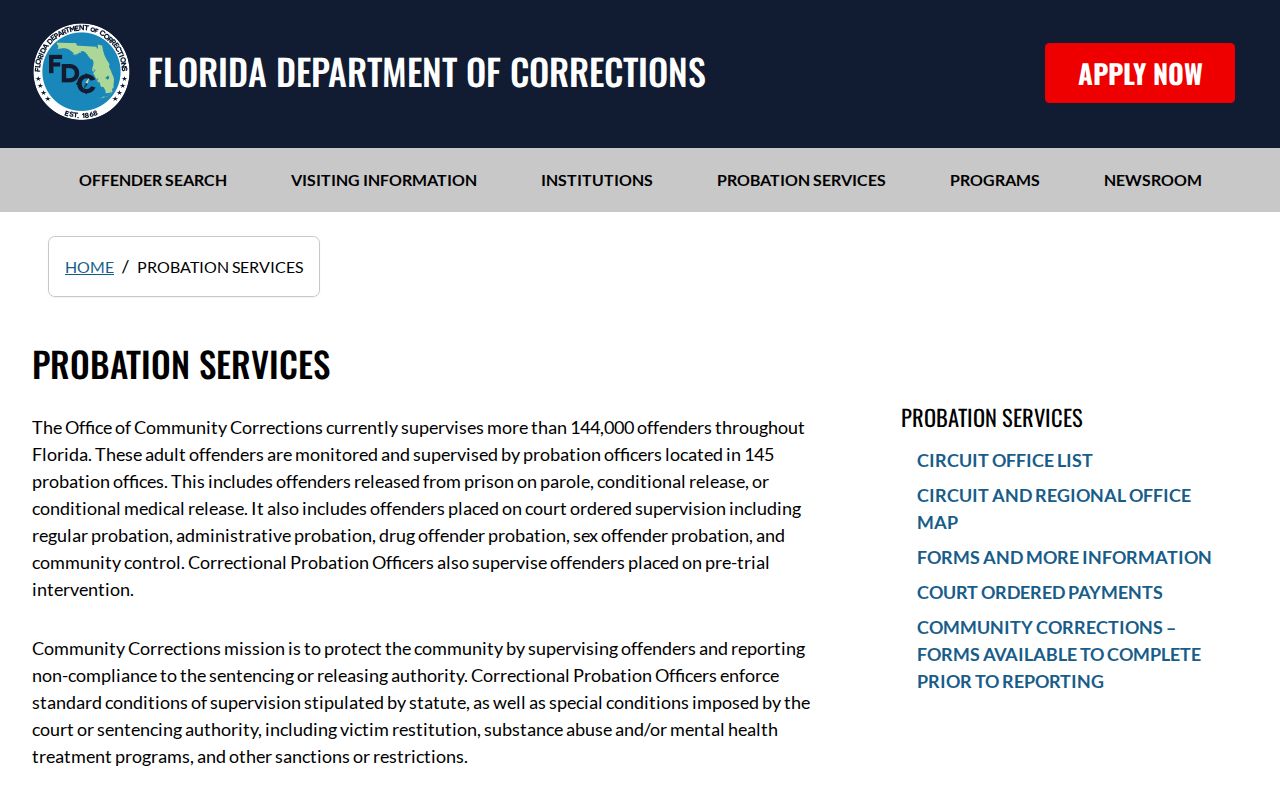
Supervision information may appear on a public profile when Florida law makes it available.
Report an Incorrect Seminole Address
Do not confront a registrant. Contact SCSO or local law enforcement when a listed Seminole County address appears wrong or a person may be noncompliant. Give the profile identity, reported address, and factual reason for concern.
A stale map pin may reflect reporting or update timing. Preserve the live profile link and let the agency verify the facts.
FDLE can handle questions about registry data, but local law enforcement is the right channel for a suspected Seminole County violation. Describe only what can be verified and avoid circulating an accusation while the agency checks the facts.
Using Registry Information Lawfully
The registry supports personal, family, and community safety planning. Use live profiles and alerts, verify urgent concerns with law enforcement, and never treat a qualifying conviction as a complete criminal history.
Public access carries a duty to preserve context. Do not detach a photo from its status, alter a flyer, or circulate an old address as current. Similar names and traits can cause harm when identifiers are skipped. Recheck the live FDLE entry, compare reported details, and leave compliance findings to law enforcement. Community notice supports informed safety choices, not threats, vigilantism, or pressure against a registrant's household.
The statutory warning also bars using public registry information to secure payment from a registrant and knowingly presenting false or materially altered information as an official public record. Keep the FDLE link intact when sharing safety information, state when it was checked, and let readers see the current government source instead of a cropped or edited copy.
Misuse is prohibited: Florida Statutes section 775.21(10)(d) bars using registry data to secure payment, passing off false information as a public record, or altering it to misrepresent the record. Do not harass, threaten, or intimidate a registrant or household.